
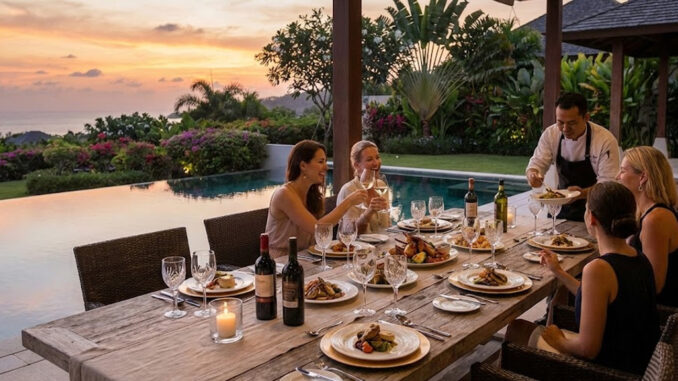
There was a time when the pinnacle of culinary indulgence was securing a reservation at a three-star establishment in Paris or New York. The noise, the theater, the waiting list—it was all part of the allure. However, a quiet revolution is taking place in the world of gastronomy. The most coveted tables are no longer in restaurants; they are in private dining rooms, overlooking manicured gardens, accessible only to a select few.
The “Amadeus” approach to dining has always been about intimacy. We believe that true luxury is not just about what is on the plate, but the atmosphere in which it is consumed. Without the intrusion of strangers or the rush of a second seating, dining becomes a ritual rather than a transaction.
This shift is being driven by a desire for hyper-personalization. As reported by culinary editors at Bon Appétit, the demand for high-end private chefs has skyrocketed, with travelers seeking menus that tell a story specific to the region they are visiting—whether that is a seafood feast in the Mediterranean or a spice-laden banquet in Southeast Asia.
The Estate as the Restaurant
For the luxury traveler, the villa is no longer just accommodation; it is a culinary destination. Modern private estates are now equipped with professional-grade kitchens designed explicitly for guest chefs. This allows for a level of interaction that is impossible in a commercial setting. Guests can walk through local markets with their chef in the morning, hand-selecting ingredients, and then watch as those raw elements are transformed into a tasting menu in the evening.
This creates a connection to the “terroir”—the taste of the land—that fits perfectly with our garden-first philosophy. When you dine in a private estate, you are often eating produce grown just meters away, harvested at the peak of ripeness.
Even the guardians of gastronomy are taking notice. The Michelin Guide has begun to highlight “accommodation with distinction,” recognizing that exceptional hospitality and exceptional food are inseparable. The line between a luxury hotel and a private home is blurring, with the latter often offering a superior, more bespoke culinary journey.
Unfiltered conviviality
Perhaps the greatest luxury of the private chef experience is the freedom of time. There are no closing hours. A lunch can bleed effortlessly into a sunset cocktail hour, and a dinner can linger late into the night. In the privacy of a walled garden or an open-air pavilion, conversation flows more freely, uninhibited by the gaze of others.
It is a return to the roots of hospitality: breaking bread with loved ones in a space that feels, for a few days at least, entirely your own.